
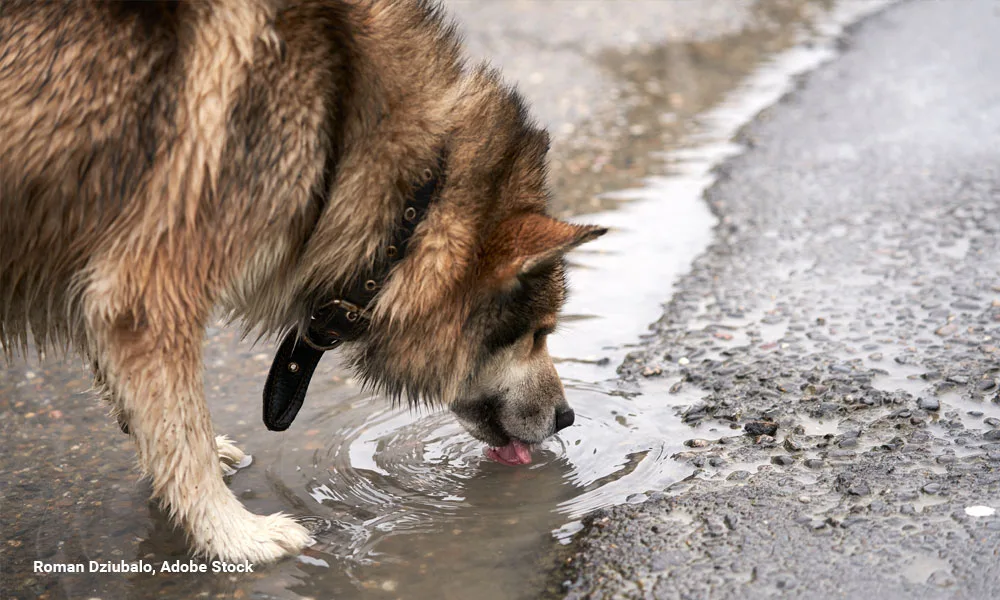
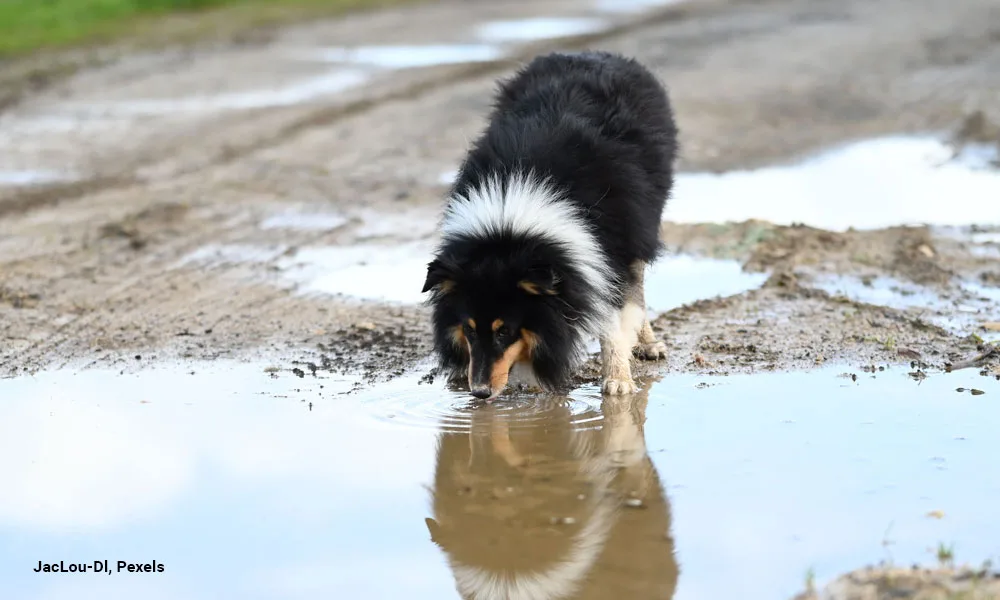
Heavy rain is part of life in Pensacola. It collects in ditches, low spots, dog parks, and backyard puddles. Most dogs see that water as an invitation. Unfortunately, standing water can carry more than mud.
Leptospirosis, often called “lepto,” is a bacterial disease that can damage a dog’s kidneys, liver and other organs. It can also infect people. Dogs may be exposed when their eyes, nose, mouth or broken skin contact water or soil contaminated with urine from an infected animal.
Rats, raccoons, opossums and other wildlife can carry the bacteria without looking sick. That means exposure is possible in urban Pensacola neighborhoods as well as wooded or rural areas.
Which Dogs Are at Risk?
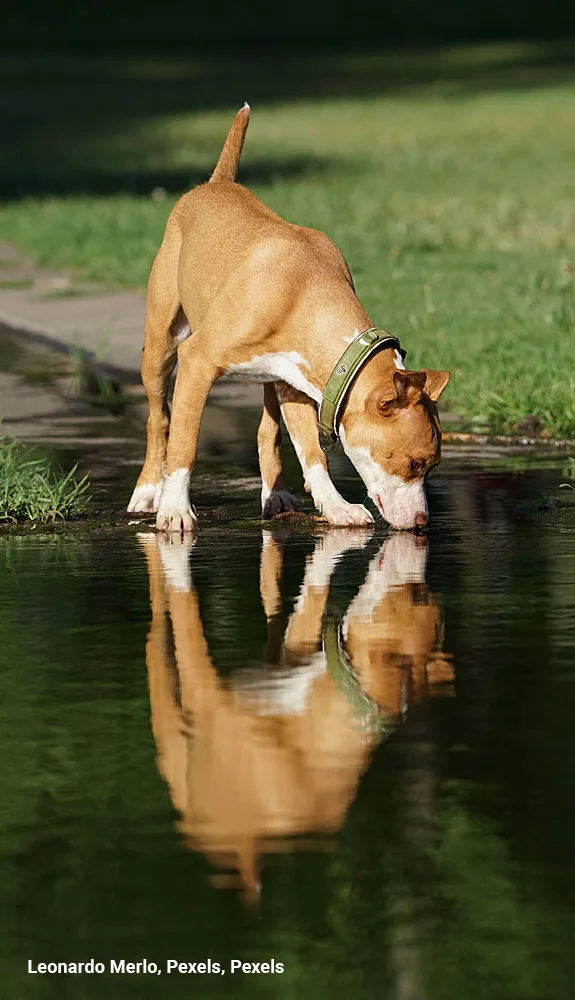
Any dog that goes outside can encounter contaminated water or soil. Risk may be greater for dogs that:
- Drink from puddles, ponds or slow-moving water.
- Explore drainage areas or places that flood.
- Spend time around rodents or wildlife.
- Hike, camp, hunt or swim in freshwater.
- Visit shared outdoor spaces.
Pensacola’s warm weather, rainfall and periodic flooding make the subject worth discussing even if a dog rarely leaves its own neighborhood. A backyard visited by wildlife can provide an opportunity for exposure.
Signs of Leptospirosis
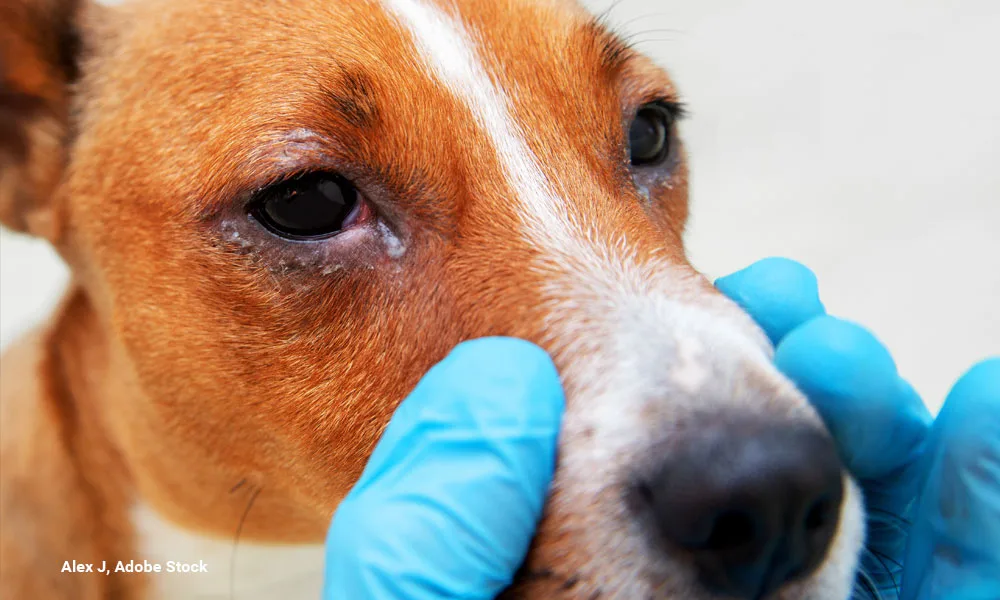
Leptospirosis does not look the same in every dog. Early signs can resemble many other illnesses and may include:
- Fever or shivering.
- Tiredness and reluctance to move.
- Loss of appetite.
- Vomiting or diarrhea.
- Muscle tenderness or stiffness.
- Increased thirst or changes in urination.
- Yellow coloring of the eyes, gums or skin.
Some dogs become seriously ill within a short time. Kidney or liver failure, breathing problems, and abnormal bleeding can develop in severe cases. A dog with these symptoms needs prompt veterinary care, especially if there has been recent exposure to standing water, floodwater or wildlife.
Diagnosis and Treatment
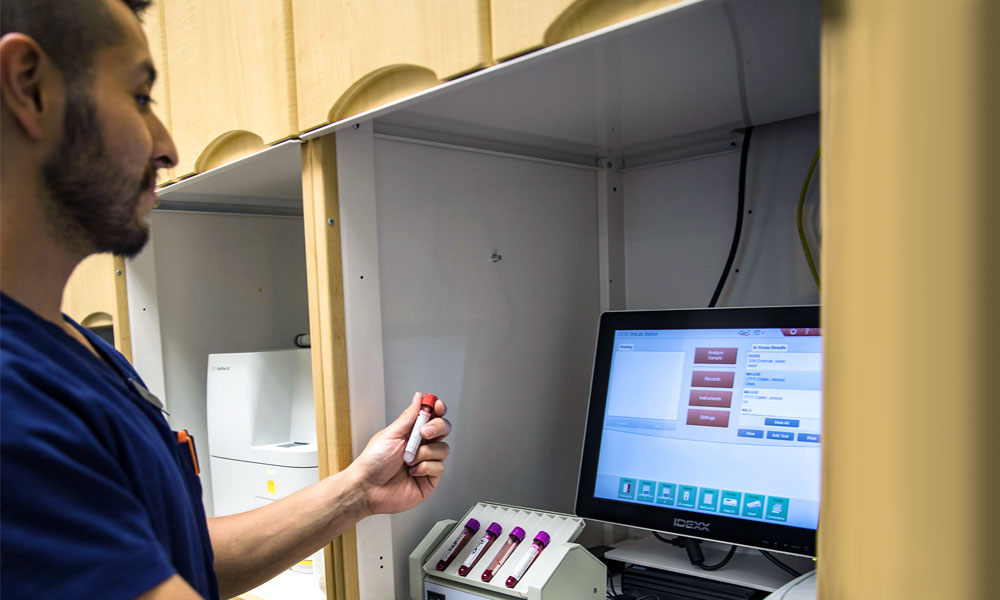
Because the symptoms overlap with other conditions, a veterinarian may recommend bloodwork, urinalysis and specific testing for leptospirosis. Imaging or additional tests may be used to evaluate affected organs or rule out another cause.
Treatment usually involves antibiotics. Dogs that are dehydrated, vomiting or showing organ problems may need hospitalization, intravenous fluids and supportive care. Early diagnosis and treatment can improve the chance of recovery and may reduce lasting damage.
Since leptospirosis can spread from animals to humans, follow our veterinary team’s instructions carefully if you suspect an infection. Be sure to avoid direct contact with urine, use gloves when cleaning, and also wash your hands thoroughly. Anyone concerned about human exposure should contact a physician.
Reducing Your Dog’s Risk
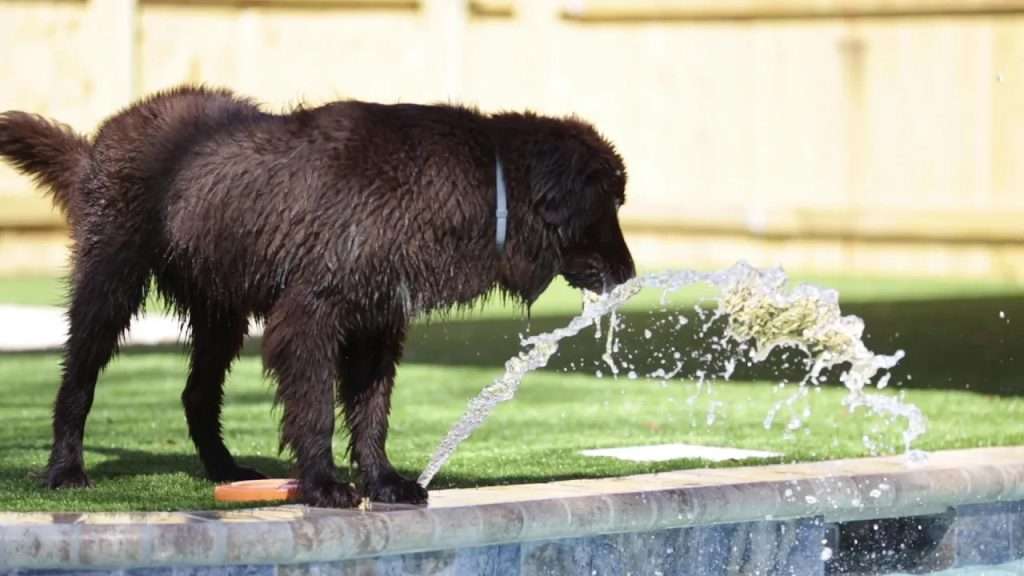
Do not let your dogs drink from puddles or standing water. Bring clean water on walks, at parks and during outdoor trips. Be sure to control rodents around the home, and store pet food securely. Also, remove outdoor conditions that attract wildlife when possible.
A canine leptospirosis vaccine is available. No vaccine eliminates every possible risk, but vaccination is an important preventive tool. Ask your veterinarian whether it should be part of your dog’s routine care and how often it should be given.
After a storm or even a day of heavy rain, choose a drier walking route and keep your dog away from flooded parks and ditches, and overflowing retention areas. Don’t think a clear-looking puddle is clean. Be sure to wash muddy paws with fresh water when you return home, especially if the skin is cracked or irritated. Keep outdoor water bowls where wildlife cannot easily reach them.
Ask East Hill Animal Hospital About Leptospirosis
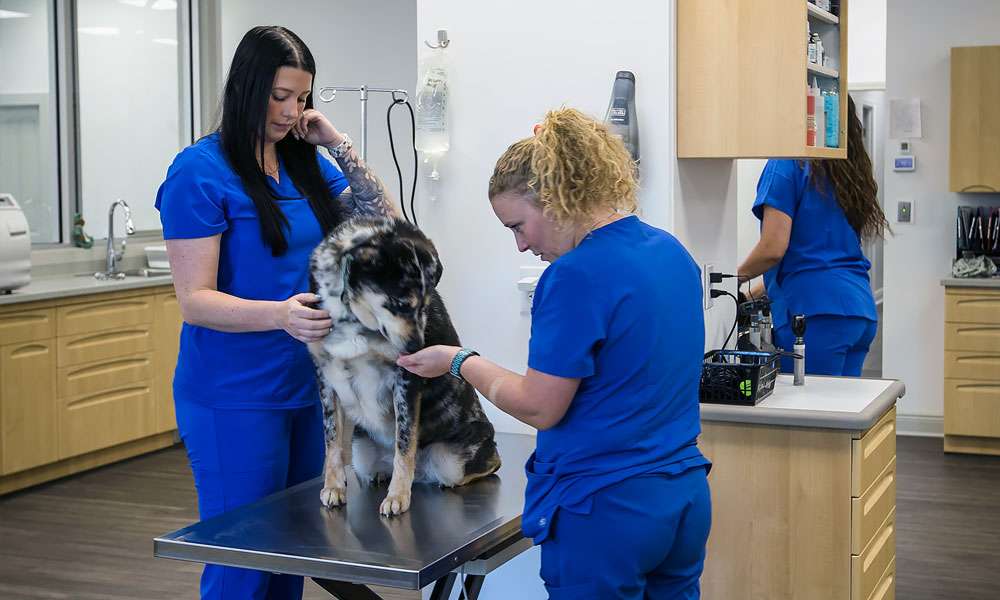
Pensacola dog owners can call East Hill Animal Hospital at 850-437-9932 to discuss vaccination or arrange an examination for a sick dog. Mention any contact with puddles, floodwater, rodents or wildlife when speaking with the veterinary team.
East Hill Animal Hospital is part of the Pensacola Pets family of companies, providing veterinary care, advanced diagnostics and related pet services for families across the Pensacola area. Rain will always be part of Gulf Coast life. Knowing what may be in the water helps owners make safer choices for their dogs.